
10 Beautiful Scottish Beaches for You and Your Dog
Well trodden beaches and the finest coastal walks by Julie Mitchell.
There is a version of retirement that nobody puts in a brochure. It does not involve a cruise ship or a sun lounger. It involves a cool morning, a familiar lead clipped to a collar, boots crunching on wet sand and the kind of wide open view that makes you feel properly alive. It involves time, which is perhaps the greatest luxury of all, time to stop, to look, to breathe and to walk somewhere beautiful without watching the clock.
Scotland gives you all of this in abundance. The coastline here is extraordinary, stretching for over 10,000 miles and encompassing everything from sheltered sandy bays to wild Atlantic headlands, from island beaches that look like something from the tropics to Victorian seaside towns full of warmth and character.
Julie has chosen ten of her favourite Scottish beaches for this guide. Some she knows well from family holidays. Others are the kind of discovery that stays with you for years. Each one is perfect dog walking territory, and each one offers something that a well-planned retirement day was made for fresh air, beautiful scenery, gentle exercise and the deep satisfaction of being somewhere wonderful with the people or animals you love most.
Because the truth is, the retirement most of us dream of is not complicated, a good beach, a good dog and enough time to enjoy both properly.
1. Sanna Bay, Ardnamuchan
The Most Westerly Beach on the British Mainland
There are beaches you visit and beaches that mark you. Sanna Bay is very much the latter. It sits at the tip of the Ardnamurchan Peninsula, the most westerly point on the British mainland and the journey to reach it is part of the experience! The single-track road winds through woodland and lochs before the land opens out and the sea appears below you, a wide, white crescent of shell sand so pale it glows, with views stretching away to Mull, Coll, Tiree and, on a clear day, the Outer Hebrides.
For me, Sanna holds a place apart. A much-loved family holiday cottage sits close by on the peninsula and the beach is woven into years of happy memory, mornings walking the tideline, afternoons watching the light change across the water, evenings when the sky turns shades of pink and gold that feel almost too good to be real. It is the kind of place that retirement was designed for.
On a weekday morning in late spring, with the Atlantic breeze keeping the midges at bay, you can walk the beach for an hour and see almost no one. Your dog will treat this as a personal gift. The dunes provide magnificent sniffing territory and the firm sand at the water’s edge is ideal for a long, unhurried wander. This is active retirement at its very finest, your body moving, your mind at rest and the whole magnificent panorama laid out in front of you.
Getting there: Take the A861 from Fort William to Salen, then follow the B8007 west. Allow around two hours from Fort William on single-track roads. Take your time and enjoy the scenery, it is worth every mile. You can also catch the Corran Ferry.
Where to stay: Kilchoan village has self-catering cottages and the welcoming Kilchoan Hotel. Salen offers further options. The peninsula rewards a stay of several nights.
Best time to visit: May to September. Late May and June offer long days, reasonable weather and far fewer visitors than the height of summer. The light in early autumn is extraordinary.
Things to do nearby: The Ardnamurchan Lighthouse at the peninsula tip, the Natural History Centre at Glenmore, summer wildlife watching for minke whales and dolphins and the short ferry from Kilchoan to Tobermory on Mull for a wonderful day trip.
2. Luskentyre Beach, Isle of Harris
The Beach That Looks Like It Should Not Exist in Scotland
If you told someone who had never visited Scotland that the country contained a beach of bleached white sand, turquoise water and sweeping dune scenery rivalling anything in the Caribbean, they would probably assume you were exaggerating. Luskentyre is not an exaggeration. It is, if anything, better in person than the photographs that have made it famous, and those photographs are extraordinary.
The beach on the west coast of Harris stretches for several miles, and the tidal flats extend so far at low tide that the sheer scale of the place takes a moment to absorb. The sound here is gentle: just the wind in the dunes and the water retreating across firm sand. The mountains of South Harris rise behind you and the Sound of Taransay opens ahead. Your dog, if they are anything like most dogs encountering this beach for the first time, will simply run with a kind of pure, uncomplicated joy that is wonderful to watch.
Getting to Harris requires a ferry crossing, which makes the whole trip feel like a proper adventure. There is something deeply satisfying about earning a beach this magnificent through a little effort. For those approaching or already living retirement, that combination of mild adventure, physical pleasure and breath-stopping natural beauty is precisely the kind of experience worth planning for.
Getting there: CalMac ferry from Ullapool to Stornoway, then drive south through Lewis and Harris, around one hour. Alternatively, ferry from Uig on Skye to Tarbert, Harris, which is much closer to Luskentyre.
Where to stay: The Hotel Hebrides in Tarbert is comfortable and dog-friendly. Self-catering cottages across Harris offer wonderful bases. Book well in advance for summer.
Best time to visit: June and July for long days and the famous Hebridean light. Late spring is increasingly popular with those who value quieter beaches and dramatic skies.
Things to do nearby: Visit a Harris Tweed weaver to see the craft that defines the islands. Walk the golden road along the rocky east coast. Look for golden eagles over the hills of North Harris.
3. West Sands, St Andrews
Where Chariots of Fire Met the North Sea
Some beaches carry a weight of cultural memory. West Sands is one of them, the long, flat sweep of golden sand with the spires and towers of St Andrews rising behind it is an iconic Scottish image, immortalised in the opening sequence of Chariots of Fire. But a film location is the least interesting thing about it. What matters is the beach itself, almost two miles of wide, open sand facing the North Sea, backed by dunes and with views across the Firth of Tay that change completely with the weather and the season.
Walking West Sands in winter, with the haar rolling in and the dunes hissing in the wind, is a genuinely elemental experience. Walking it on a clear autumn morning, with the town lit golden behind you and the tide far out, is something else again. It is the kind of beach that suits every mood, rewards every visit differently and reminds you that the simplest pleasures tend to be the most reliable ones.
St Andrews itself makes every trip doubly worthwhile. This is a university town of real beauty and considerable history, with excellent independent shops, fine restaurants and a warmth that belies its occasional reputation for grandeur. An afternoon on the beach followed by supper in a good St Andrews restaurant is the kind of day that retirement living should be built around.
Getting there: Around one hour from Edinburgh by car via the Forth Road Bridge and A91. Regular bus and train services from Edinburgh and Dundee.
Where to stay: A wide range from the iconic Old Course Hotel to comfortable guesthouses throughout the town. Many properties welcome dogs.
Best time to visit: Year-round. Winter walks are particularly memorable. Summer brings warmth and the full buzz of a busy, happy university town.
Things to do nearby: The ruined cathedral and castle, the British Golf Museum, the East Neuk coastal path and the charming fishing villages of Crail, Pittenweem and Anstruther.
4. Calgary Bay, Isle of Mull
A Perfect Arc of Sand on the West of Mull
There is a moment, driving the narrow road above Calgary Bay, when the beach appears below you for the first time and you simply have to stop. The bay curves perfectly between two green headlands, the sand is white and wide, the water is an improbable shade of blue-green and beyond it the islands of Coll and Tiree float on the horizon. It looks like a painting of what a Scottish beach should look like and the reality matches every expectation.
Calgary is more intimate in scale than Luskentyre, which means a beach walk here tends to become a broader wander along the rocky headland shores. Otters have been spotted in these waters and white-tailed eagles sometimes pass overhead, which turns any ordinary walk into something more like a wildlife encounter. Your dog will need to be kept in check near the rock pools, but the beach itself is wonderful running territory.
Mull is one of those islands that people visit once and return to year after year. The combination of wildlife, scenery, the colourful harbour town of Tobermory and beaches like Calgary makes it an ideal destination for active retirees who want to fill their days with genuine experience. The ferry crossing from Oban adds a pleasant sense of occasion, and the island rewards those who slow down enough to look properly.
Getting there: CalMac ferry from Oban to Craignure or from Kilchoan to Tobermory. Drive north-west on the B8073 from Dervaig. Around 40 minutes from Tobermory.
Where to stay: The Calgary Farmhouse offers self-catering right next to the beach and is dog-friendly. Tobermory has excellent hotels and guesthouses.
Best time to visit: May to September. Spring wildflowers in the machair behind the beach are spectacular. Otters can be spotted year-round along the rocky shore.
Things to do nearby: Tobermory harbour, Duart Castle, The Island of Iona, world-class wildlife watching across the island and the Mull Theatre for a cultural evening.
5. Rosemarkie Beach, Black Isle
Dolphins, Red Cliffs and a Village Worth Lingering In
The Black Isle is a peninsula of fertile farmland, ancient woodland and red sandstone cliffs between the Cromarty and Beauly Firths with some incredible geology made famous by Hugh Miller. Rosemarkie on its north-east coast is among the most charming places in the Highlands. The beach here is a pleasant stretch of sand and shingle backed by those distinctive red cliffs and it sits within walking distance of something that sets it apart from almost anywhere else in the country.
Chanonry Point, a short walk from the village along the shore, is one of the most reliable places in Europe to watch wild bottlenose dolphins from dry land. The tidal rip concentrates fish and the Moray Firth bottlenose pod, a resident group of around 200 animals, regularly comes close inshore to feed. Standing on the shingle at Chanonry with your dog at your heel, watching dolphins surfacing twenty metres away, is one of the great wildlife experiences available in Britain and it costs nothing except the willingness to be there.
Rosemarkie has a lovely cafe right on the beach, an excellent small museum dedicated to the Picts and a settled, contented quality that makes it a pleasure to explore at leisure. You can picture yourself here: late morning, the beach walked, a coffee in hand, the dolphins just visible offshore and the rest of the day entirely your own. That is the retirement dream made real and remarkably accessible.
Getting there: Cross the Kessock Bridge from Inverness and follow the A832 through Fortrose to Rosemarkie. Around 20 minutes from Inverness city centre.
Where to stay: Fortrose, just minutes away, has guesthouses and self-catering. Inverness offers a wide range of hotels and is an excellent base for the whole area.
Best time to visit: Dolphins are present year-round but most active near Chanonry at an incoming tide in summer. Early mornings offer the best wildlife watching with less company.
Things to do nearby: The Groam House Museum and its remarkable Pictish carved stones, Fortrose Cathedral, the Fairy Glen woodland walk and excellent cycling routes across the Black Isle.
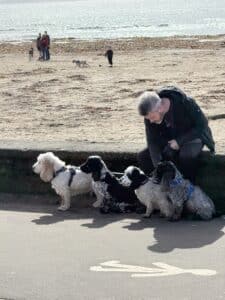
6. Portobello Beach, Edinburgh
The Capital’s Beloved Seaside
Not every great beach requires a ferry crossing or a long drive. Sometimes the finest walk of the day is the one closest to home, and for Edinburgh people Portobello has been providing that walk for well over a century. The wide sandy beach east of the city, stretching along the Firth of Forth with views across to Fife, has the easy, unpretentious quality of a place that people genuinely use and genuinely love.
On a weekday morning, Portobello belongs to the dog walkers. They come from across the city, spaniels and terriers and large enthusiastic dogs of no particular breed, their owners in comfortable conversation or companionable silence, all moving at the pace that a good beach walk naturally imposes. There is a sociability here that is quite distinct from more remote beaches. You are likely to exchange a friendly word, to feel part of something pleasant and communal, to return home feeling better than when you left.
For those who are retired in or near Edinburgh, or who are thinking about where to spend their next chapter, Portobello is a reminder of what urban retirement can offer. The full richness of a great city is on your doorstep and the sea is three miles away. That combination of cultural depth and coastal access is difficult to match anywhere in Britain.
Getting there: Regular bus services from central Edinburgh or a 20-minute drive. Parking along the promenade fills quickly on sunny days.
Where to stay: Edinburgh offers every type of accommodation. The New Town and Leith provide good bases with easy access to the beach.
Best time to visit: Year-round. Winter mornings on the promenade have a quiet, contemplative quality. Summer brings a festive, traditional seaside atmosphere.
Things to do nearby: Arthur’s Seat, Craigmillar Castle, the excellent independent shops and cafes of Portobello itself and the full cultural offer of central Edinburgh a short bus ride away.
7. East Beach, Nairn
Golden Sands and Mountain Views on the Moray Firth
Nairn sits on the Moray Firth coast about 16 miles east of Inverness and generations of Highland families have regarded it as the proper destination for a day by the sea. There is a particular quality to Nairn that rewards loyalty, the wide East Beach stretching towards the Culbin Forest, the views across the Firth to the Black Isle and Sutherland, the championship golf courses alongside the water and an unhurried town atmosphere that feels genuinely restorative.
The walk from the East Beach eastwards towards Culbin is one of those routes that you can repeat without it ever becoming routine, because the light changes, the season changes and what the sea is doing on any given day changes everything. Dogs are entirely in their element here, particularly on the broad lower beach at low tide where the sand is firm enough for a proper run. On a clear day the snow-capped mountains of Sutherland are visible to the north-west, a reminder that you are walking in one of the most dramatic landscapes in Europe.
Nairn has long been associated with good health and fresh air, which is why it grew as a Victorian resort in the first place. Those Victorian visitors were onto something. There is something about this coast, the quality of light and the particular pleasure of a long beach walk with someone you love, human or canine, that genuinely refreshes. This is the active retirement in its most straightforward and satisfying form.
Getting there: On the A96, around 25 minutes from Inverness by car. Regular bus and train services from Inverness. The East Beach is a short walk from the town centre.
Where to stay: The Golf View Hotel is comfortable and well-placed. Self-catering cottages are available in the town and surrounding Nairnshire countryside.
Best time to visit: May to September for the most reliable weather. Autumn walks along the Culbin shore, with the Firth under great grey skies and the forest behind you, have their own magnificent quality.
Things to do nearby: Cawdor Castle a few miles inland, the Culbin Forest for longer walking, Findhorn with its famous community and beautiful beaches, and Brodie Castle just to the east.
8. Burntisland Beach, Fife
Edinburgh’s Finest View, Seen From the Other Side
Burntisland has been welcoming Edinburgh day-trippers since the Victorian railway made crossing the Forth easy, and there is a long continuity of happiness attached to this beach that you can feel on a warm summer afternoon. Families, dog walkers and retired couples who have been coming here for decades all share the wide sandy beach and the pleasant promenade with a comfortable ease that comes from a place knowing exactly what it is.
What makes Burntisland genuinely special is the view. Looking south across the Firth of Forth from the beach, you see one of the finest urban panoramas in Britain, Edinburgh Castle on its rock, the Old Town rising behind it, the Pentland Hills beyond and the entire skyline of the capital spread across the far shore. It is a view that most people who live in Edinburgh never see, because you have to leave the city to appreciate it properly.
There is a lovely irony in that. The best way to appreciate Edinburgh is to walk away from it, cross the water and look back. For those in retirement, with time to take that different perspective, with a dog pulling at the lead and the city glittering across the Firth, it is a reminder of how much beauty is available to us when we simply slow down enough to look.
Getting there: Around 30 minutes from Edinburgh by car via the Forth Road Bridge. Regular ScotRail trains from Edinburgh Waverley make it an ideal car-free day trip.
Where to stay: Kirkcaldy and Aberdour both offer accommodation nearby. Edinburgh itself is 30 minutes away for those using Burntisland as a day destination.
Best time to visit: Summer for the traditional seaside atmosphere. Autumn and winter visits offer the beach almost entirely to yourself, with the Edinburgh skyline particularly atmospheric in low light.
Things to do nearby: The Fife Coastal Path, Aberdour Castle and its beautiful terraced gardens, and the many charming East Neuk fishing villages a short drive further along the coast.
9. Traigh Mhor, Isle of Lewis
The Beach That Also Serves as an Airport
Not many beaches share their space with light aircraft, but Traigh Mhor on the north-east coast of Lewis is also a working airstrip at low tide. Small planes land on the firm sand and watching them while your dog sprints towards the waterline is one of those experiences that is simultaneously surreal and absolutely, quintessentially Scottish.
The beach itself is vast and flat, extending for an extraordinary distance when the tide recedes. The sense of space here is almost overwhelming, particularly if you have come from a more enclosed landscape. The sky above Lewis feels bigger than it should, and the light moves across the sand in patterns that change from minute to minute. Walking Traigh Mhor slowly, without any urgency whatsoever, is one of the great meditative experiences available in this country.
The north end of Lewis, around Ness and the Butt of Lewis, is one of the most authentically remote parts of Scotland. The Gaelic language is spoken as a living everyday tongue. The traditional culture of the islands is present in the landscape, the architecture and the warmth of the people. Those who come here in retirement, with the time to slow down and truly look, tend to find something they did not know they were looking for. That is the particular gift of unhurried travel.
Getting there: CalMac ferry from Ullapool to Stornoway, or fly to Stornoway Airport. Follow the A857 north to Ness, then east to Cross and Eoropie. Around 45 minutes from Stornoway.
Where to stay: Self-catering in the Ness area. The Cabarfeidh Hotel and Royal Hotel in Stornoway are comfortable and welcoming.
Best time to visit: Summer for long days and the extraordinary northern light. Visit at low tide to experience the full scale of the beach. Late spring machair wildflowers are spectacular.
Things to do nearby: The Butt of Lewis lighthouse, the Ness Heritage Centre, the Dun Carloway Broch and the unmissable Callanish Standing Stones on the western side of the island.
10. Embo Beach, Dornoch
Seals, Solitude and a Royal Burgh Worth Knowing
Embo is a small village just north of Dornoch on the Sutherland coast and its long stretch of sand is one of the finest and least crowded beaches in the north of Scotland. At low tide the beach extends northwards for a considerable distance, firm and wide, with Loch Fleet and the Dornoch Firth behind you and the open sea ahead. Grey seals haul out on the sandbanks offshore and watch your approach with the mild curiosity of animals that have never had particularly good reason to be afraid. Your dog will find this fascinating.
Dornoch itself is one of Scotland’s genuinely underappreciated towns. A small royal burgh with a beautiful thirteenth-century cathedral, excellent independent shops, a first-class golf course and a settled, elegant quality that makes it a pleasure to simply walk through. It wears its history lightly and its welcome warmly, and for those in or approaching retirement it represents a particular kind of Scottish life: cultured, active, unhurried and surrounded by natural beauty.
The combination of Embo beach and Dornoch town is hard to beat for a day that encompasses everything the retirement lifestyle promises. Walk the beach in the morning with the seals offshore. Explore the town at lunchtime. Watch the ospreys over Loch Fleet in the afternoon. Your dog will be exhausted. You will feel wonderful. That is precisely the point.
Getting there: On the A9 north of Inverness, around one hour by car. Turn off at Dornoch and follow signs to Embo, around two miles north of the town. Parking at the beach.
Where to stay: The Royal Golf Hotel and Dornoch Castle Hotel are both excellent and central. Self-catering cottages available in Dornoch and Embo.
Best time to visit: May to September for the best weather. The Loch Fleet nature reserve is outstanding for birdwatching in spring with summer ospreys a highlight. Autumn light on the Dornoch Firth is remarkable.
Things to do nearby: Dornoch Cathedral, Skelbo Castle, the Loch Fleet National Nature Reserve and Dunrobin Castle near Golspie a short drive north.
The Retirement That Looks Like This
Reading back through these ten beaches, a pattern emerges. Every one of them offers something that cannot be bought, packaged or rushed, the experience of being somewhere genuinely beautiful, moving through it at your own pace, with the dog or person you love most beside you.
This is what the best retirement looks like. Not passive. Not sedentary. Not a withdrawal from life but a full, joyful engagement with it, on your own terms and in your own time. Physically active. Curious about the world. Nourished by fresh air and beauty and the reliable companionship of a good dog on a long beach.
Scotland makes this astonishingly easy. The coastline is here, the beaches are here and the dogs are ready. What it requires from you is simply the time and the freedom to be there.
“The best retirement is not a withdrawal from life. It is a full, joyful engagement with it, on your own terms and in your own time”.
At Wellington Wealth, we spend a great deal of our working lives helping people create exactly that freedom. The financial planning that makes a retirement like this possible is not complicated in its ambition, even when the detail requires care and expertise. It is about building enough security that you can make choices. It is about understanding what matters to you, and then putting the structures in place to protect and sustain it.
Whether you are ten years from retirement or already living it, whether your ideal companion on a cold Hebridean morning is a golden retriever or a grandchild who has just discovered that they love the sea, the conversation about what you want your future to look like is one worth having properly and having soon.
We are here when you are ready.
Talk to Wellington Wealth
You have worked hard for this life. Let us help you make the most of it.
Book a conversation >>> or call us to take the first step on 0141 221 3222
BE AWARE
This information is for guidance only and does not constitute regulated financial advice. To ensure you have personalised advice for your particular set of circumstances, you must make an appointment and speak to one of our professional advisers. Please note these services are chargeable. The facts in this article were correct at time of writing, but you may be reading it in the future. Always check rates and allowances before taking action or speak to a qualified financial planner. All investments carry an element of risk, they can fall as well as rise and you may not get back what you pay in. Errors & omissions excepted.
#retirement #retirementplanning #dogwalks #retirementwalks #scottishbeaches #beautifulbeachesoftheworld #beaches #RetirementScotland